

Orthodontics
What is orthodontics?

Cases Requiring Orthodontic Treatment

The above are all typical symptoms of malocclusion, which not only affect aesthetics but are also difficult to clean, leading to dental caries and periodontal diseases. In severe cases, chewing function can be restricted, affecting diet.
Benefits of Orthodontic Treatment
-
Boost facial confidenceOrthodontic treatment can improve poor facial appearance caused by misaligned teeth, helping you gain greater confidence in life and work.
-
Correct dental occlusionMisaligned teeth lead to uneven occlusal force, resulting in tooth wear and increasing the risk of tooth loosening and loss. Orthodontics aligns teeth and normalizes occlusal relationships to preserve dental health.
-
Improve oral functions
Dental malocclusion may affect pronunciation and lip closure, which can be improved after orthodontic treatment.
-
Facilitate oral hygiene
Crooked teeth are hard to clean and prone to plaque accumulation, tartar deposition, swollen gums and other periodontal diseases. Straightened teeth after orthodontics make daily cleaning easier and help prevent dental caries and periodontal disease.
Orthodontic cases

Fixed brace orthodontics

Fixed brace orthodontics is a traditional treatment using brackets and archwires. Brackets are bonded onto each tooth with adhesive, then connected by archwires. Pressure delivered through the brackets guides tooth movement to achieve orthodontic correction. Based on bracket materials, it is divided into metal bracket treatment and ceramic bracket treatment. By the mechanism securing archwires, it can be classified into conventional non‑self-ligating bracket treatment and self-ligating bracket treatment.
Since fixed appliances cannot be removed by patients, it is essential to brush teeth and rinse the mouth promptly after meals to prevent gingival inflammation and dental caries.
Since fixed appliances cannot be removed by patients, it is essential to brush teeth and rinse the mouth promptly after meals to prevent gingival inflammation and dental caries.
Clear aligner orthodontics

Lingual bracket orthodontic

Early orthodontics
The American Association of Orthodontists (AAO) recommends that children see an orthodontist as soon as any dental, jaw or facial developmental concerns are identified, and no later than age 7. This allows for early detection of problems. Many cases require early intervention to reduce the severity of malocclusion and lower the complexity of subsequent orthodontic treatment.
If early treatment is unnecessary, the child may be recommended for regular monitoring or to begin treatment during puberty (around age 12), when all primary teeth have been replaced by a full set of permanent teeth.
If early treatment is unnecessary, the child may be recommended for regular monitoring or to begin treatment during puberty (around age 12), when all primary teeth have been replaced by a full set of permanent teeth.
Space Maintainer

Arch Expander

Functional Appliance

Time for orthodontics


Factors Affecting Orthodontic Costs

Fees for orthodontic treatment in Shenzhen and Hong Kong range from $25,000 to 80,000. Orthodontic prices vary widely. What are the contributing factors?
Treatment Modality and Brand
Orthodontic treatments include fixed bracket orthodontics, clear aligner treatment, lingual orthodontics and more. Prices differ by treatment type. Within each treatment category, costs also vary across brands.
Case Complexity
Additional charges apply for cases featuring maxillomandibular discrepancy, severe dental crowding, substantial protrusion or retraction, which require supplementary procedures such as tooth extraction and mini-implants. Complex cases demand longer treatment duration, more follow-up appointments and greater clinician workload, which raises the total cost accordingly. For this reason, accurate quotes cannot be obtained via online or telephone consultation. Quotes given remotely by any clinic may differ substantially after an in-person visit. Full costs can only be confirmed after clinical examination, diagnosis and custom orthodontic treatment planning by an orthodontist.
Clinician Experience and Expertise
A dentist’s qualifications and experience have the greatest impact on orthodontic outcomes. More experienced orthodontists tend to charge higher fees. Generally, general dentists charge less than orthodontic specialists. All orthodontists at Reborn are specialist orthodontists. Therefore, when comparing orthodontic pricing, you should evaluate costs under the same treatment plan and identical appliance brand, as well as the clinician’s qualifications and experience. It is recommended to attend consultations at multiple clinics for direct assessment of each doctor’s professionalism and bedside manner.
First choice: orthodontic specialists
Generally speaking, there are two types of dentists who provide orthodontic treatment for patients: general dental practitioners and orthodontic specialists. General dental practitioners deliver multidisciplinary care focusing on prevention, treatment and restoration of oral conditions. Orthodontic specialists receive professional training and hold specialist qualifications in orthodontics, dedicating their practice exclusively to orthodontic treatment. Orthodontic specialists are in short supply both in mainland China and overseas.
There are more than 2,500 dentists in Hong Kong, among whom only 71 are orthodontic specialists. In mainland China, out of 220,000 dentists, merely over 7,000 are orthodontic specialists. This means that whether in Hong Kong or mainland China, most dentists offering orthodontic services are general practitioners, while orthodontic specialists account for only 3% — a rare group indeed.
For simple orthodontic cases, both types of dentists may achieve satisfactory results. However, for complex cases, general dentists lack systematic knowledge frameworks and theoretical foundations. Their professional capability to predict and control tooth movement during treatment planning and clinical procedures may be insufficient. This can lead to poor orthodontic outcomes or even failed treatment, eventually requiring time-consuming and labor-intensive re-treatment. Therefore, orthodontic specialists should be your first choice for orthodontic treatment.
There are more than 2,500 dentists in Hong Kong, among whom only 71 are orthodontic specialists. In mainland China, out of 220,000 dentists, merely over 7,000 are orthodontic specialists. This means that whether in Hong Kong or mainland China, most dentists offering orthodontic services are general practitioners, while orthodontic specialists account for only 3% — a rare group indeed.
For simple orthodontic cases, both types of dentists may achieve satisfactory results. However, for complex cases, general dentists lack systematic knowledge frameworks and theoretical foundations. Their professional capability to predict and control tooth movement during treatment planning and clinical procedures may be insufficient. This can lead to poor orthodontic outcomes or even failed treatment, eventually requiring time-consuming and labor-intensive re-treatment. Therefore, orthodontic specialists should be your first choice for orthodontic treatment.
Recommended Orthodontists
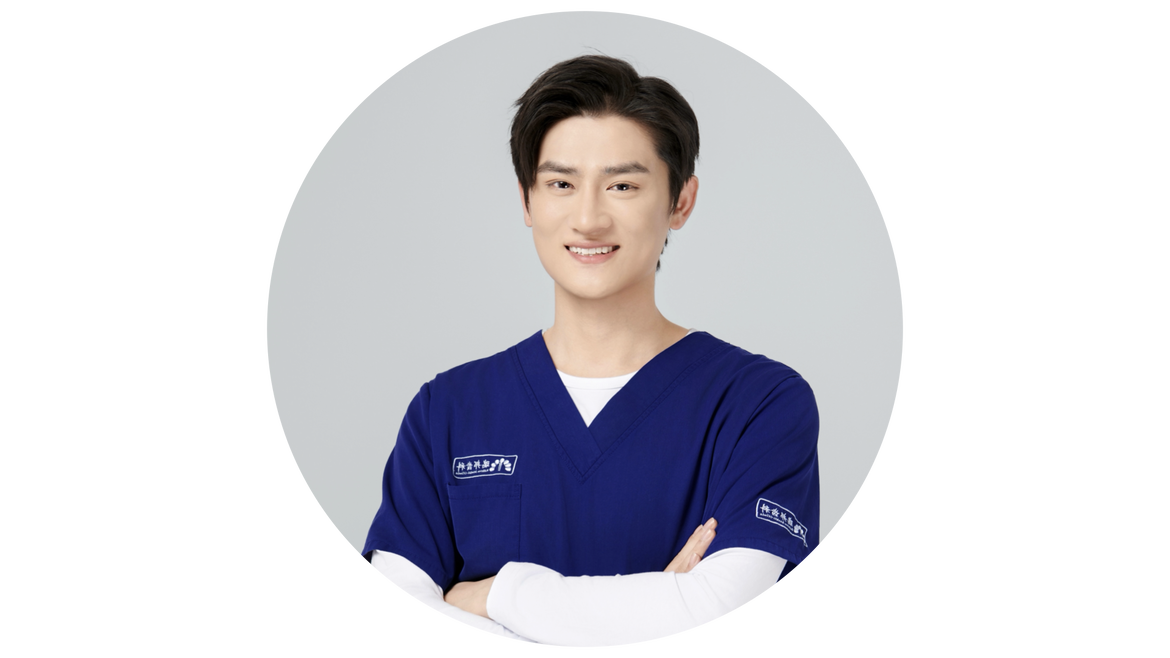
Dr. Deyang Liu, Orthodontic Specialist
Attending Physician, Orthodontist
9‑year specialized experience in orthodontics
Graduated from Bethune Medical College
• 2021 First Prize of Orthodontics, Beijing Dental Case Competition
• 2021 Best Young Orthodontist Award, Ormco Orthodontic Case Summit
Attending Physician, Orthodontist
9‑year specialized experience in orthodontics
Graduated from Bethune Medical College
• 2021 First Prize of Orthodontics, Beijing Dental Case Competition
• 2021 Best Young Orthodontist Award, Ormco Orthodontic Case Summit
Academic Activities & Honors

2021 First Prize of Orthodontics, Beijing Dental Case Competition
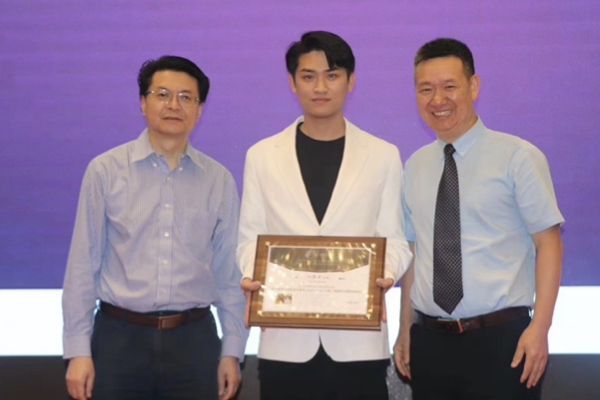
2021 Best Young Orthodontist Award, Ormco Orthodontic Case Summit
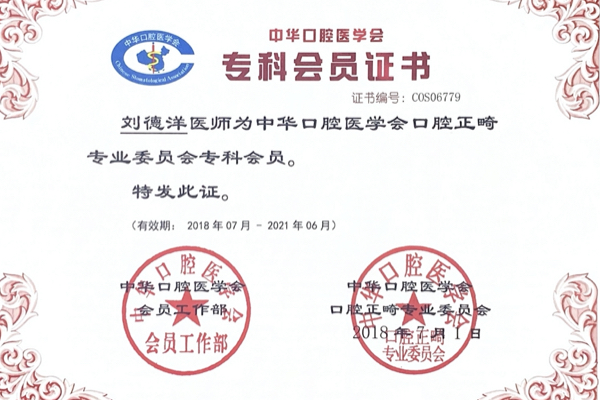
Specialist Member of the Chinese Orthodontic Society, Chinese Stomatological Association
-
How long does orthodontics take?

Depending on age and the complexity of malocclusion, orthodontic treatment usually takes 18 to 24 months to complete. Please consult your orthodontist for an accurate treatment duration.
Factors that may extend the treatment period include:·More complex orthodontic cases.
·Missing scheduled follow-up appointments as required by the dentist.
·Insufficient wearing time of appliances, including braces, elastics and retainers. -
Is tooth extraction necessary for orthodontics?Tooth extraction is performed to create adequate space so that other teeth can be aligned neatly. Not everyone requires extraction prior to orthodontic treatment. We conduct rigorous diagnosis before carefully deciding whether tooth extraction is necessary.

-
Contraindications for orthodontics

·Patients with severe cardiovascular diseases and hypertension
·Patients with hemorrhagic diseases
·Patients with hepatic and renal diseases
·Patients with hyperthyroidism
·Patients with acute infectious diseases
·Patients with periodontal disease (periodontal treatment is required prior to orthodontics)
·Patients with oral mucosal ulcerative lesions
·Patients with oral tumors
·Pregnancy
·Lactation period